


How to Choose the Right Boom Lift for Your Construction Project?


Learn how to choose the right boom lift for your construction project. Compare boom lift types, working height, platform capacity, terrain, and safety features.
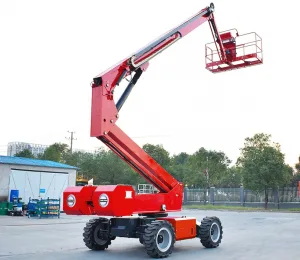
EVERSTAR: Boom lift model on flat road.
Introduction
Choosing the right boom lift is essential for improving productivity, maintaining job site safety, and controlling construction costs. Whether you are working on a commercial building, installing steel structures, performing exterior maintenance, or completing industrial repairs, the right aerial lift can help workers reach elevated areas efficiently.
However, not every boom lift is suitable for every construction project. Factors such as working height, horizontal outreach, platform capacity, ground conditions, and job site restrictions all affect equipment selection.
In this guide, we will explain how to choose the right boom lift for your construction project and what to consider before renting or purchasing one.
1. Understand the Different Types of Boom Lifts
The first step is to understand the main types of boom lifts available. Different models are designed for different working environments and access requirements.
Articulating Boom Lift
An articulating boom lift features multiple sections connected by joints, allowing the boom to bend around obstacles. This design is particularly useful when workers need to access hard-to-reach areas.
Typical applications include indoor maintenance, industrial installations, building repairs, and construction work around pipes or structural elements.
Choose an articulating boom lift when your project requires flexible positioning rather than simply reaching a higher elevation.
Telescopic Boom Lift
A telescopic boom lift uses extendable boom sections to provide greater horizontal outreach and direct access to elevated work areas. It is often suitable for large construction sites where workers need to reach distant locations.
Common applications include steel erection, bridge construction, exterior building installation, and infrastructure maintenance.
If your project involves working at significant heights or reaching across obstacles, a telescopic boom lift may be the better option.
Electric vs. Diesel Boom Lifts
Electric boom lifts are generally suitable for indoor environments because they produce no exhaust emissions during operation and often operate more quietly. They are commonly used in warehouses, factories, and indoor construction projects.
Diesel-powered boom lifts are frequently used on outdoor construction sites, particularly where higher power and rough-terrain capability are required.
When choosing between electric and diesel models, consider ventilation, operating duration, ground conditions, available charging or refueling facilities, and environmental requirements.
2. Determine the Required Working Height and Outreach
Working height is one of the most important factors when selecting a boom lift. Before choosing a model, identify the maximum elevation workers must reach and the distance between the equipment and the work area.
Calculate the Required Working Height
Working height generally refers to the maximum height workers can reach while standing on the platform. Manufacturers may distinguish between platform height and working height, so always check the specifications carefully.
For example, if workers need to install lighting near the top of a two-story commercial building, a compact boom lift may be sufficient. Taller buildings or elevated industrial structures may require a model with greater reach.
Select equipment with enough height to complete the task comfortably, while avoiding unnecessary oversizing.
Evaluate Horizontal Outreach
Vertical reach alone does not determine whether a boom lift can access the work area. Horizontal outreach is equally important when workers need to reach over landscaping, equipment, walls, or other obstacles.
Review the manufacturer’s working envelope or reach diagram to confirm that the lift can reach the required position safely. Remember that maximum height and maximum horizontal outreach may not be achievable simultaneously.
3. Check Platform Capacity and Load Requirements
Platform capacity determines how much weight the boom lift can safely support. The total load includes workers, tools, materials, and other equipment carried on the platform.
For example, a task involving two technicians and lightweight hand tools may require less capacity than installing heavy building components with specialized equipment.
Before selecting a boom lift, consider:
- The maximum number of workers on the platform.
- The combined weight of workers, tools, and materials.
- Any restrictions on carrying bulky or heavy equipment.
- The manufacturer’s rated platform capacity and operating instructions.
Never exceed the specified platform capacity. If your project requires additional tools or materials, choose a suitable model with sufficient rated capacity rather than relying on estimates.
4. Consider Ground Conditions and Job Site Accessibility
Construction sites often have uneven surfaces, slopes, loose soil, or limited access routes. These conditions can significantly affect boom lift performance and stability.
Indoor and Outdoor Ground Conditions
For smooth indoor floors, a compact electric boom lift with appropriate tires may be suitable. Outdoor construction projects with uneven terrain may require a rough-terrain boom lift equipped with features designed for demanding site conditions.
However, not every outdoor lift is suitable for soft soil or steep slopes. Check the manufacturer’s limits for ground slope, surface conditions, tire configuration, and permitted operating conditions.
Check Space and Access Restrictions
Measure entrance widths, door heights, aisle dimensions, and available turning space before bringing equipment to the site. Consider overhead obstructions, nearby power lines, and the space required for safe positioning.
A smaller boom lift may be more practical for confined areas, while larger construction sites can often accommodate equipment with greater reach and platform capacity.
5. Evaluate Safety Features and Operator Training
Safety should always be a priority when choosing a boom lift. The right equipment must match both the working environment and the operator’s level of training.
Important safety features and considerations include:
- Emergency lowering systems:Allow the platform to be lowered during certain equipment or power failures.
- Platform overload protection:Helps prevent operation when the rated capacity is exceeded.
- Tilt and stability monitoring:Provides warnings or restrictions under specified unsafe conditions, depending on the model.
- Guardrails and approved fall protection:Help protect workers when used according to applicable requirements.
- Emergency stop controls:Allow operators to stop machine functions when necessary.
Operators should receive appropriate training and follow the manufacturer’s instructions. Before each use, inspect the equipment, review the work area, and establish an emergency rescue plan.
Also identify overhead hazards and maintain the required clearance from energized power lines. Safety procedures should comply with applicable local regulations and site-specific requirements.
6. Compare Rental Costs and Purchase Costs
Your project duration and equipment utilization rate will influence whether renting or purchasing a boom lift makes more financial sense.
When Renting Makes Sense
Renting is often a practical option for short-term construction projects, occasional maintenance tasks, or jobs that require different equipment specifications at different stages.
Rental costs may include delivery, collection, insurance, and other service charges. Confirm these expenses before making a decision.
When Buying Is More Suitable
Purchasing may be more economical for contractors who use boom lifts regularly across multiple projects. Ownership provides greater scheduling flexibility but also involves maintenance, inspections, storage, transportation, and depreciation.
Compare the total cost of ownership with the expected rental costs over the equipment’s useful life. Consider your workload, maintenance capabilities, and future project requirements rather than focusing only on the initial purchase price.
7. Create a Boom Lift Selection Checklist
Before finalizing your decision, review the following checklist:
- Required platform height and working height.
- Maximum horizontal outreach.
- Total platform load, including workers, tools, and materials.
- Indoor or outdoor operating environment.
- Ground conditions and slope limitations.
- Site access dimensions and available operating space.
- Required power source and operating duration.
- Safety features, operator training, and maintenance support.
- Rental availability or long-term ownership costs.
Comparing these factors across several models makes it easier to identify a boom lift that meets your project’s technical and budget requirements.
FAQ
What type of boom lift is best for construction projects?
The best type depends on your access requirements. Articulating boom lifts are useful for reaching around obstacles, while telescopic boom lifts are suitable for applications requiring extended horizontal outreach. Rough-terrain models may be appropriate for certain outdoor construction environments.
What safety precautions should operators follow?
Operators should receive appropriate training, inspect the equipment before use, follow rated load limits, check ground conditions, and identify overhead hazards. They must also follow the manufacturer’s operating instructions and applicable safety regulations.
Conclusion
Choosing the right boom lift for your construction project requires more than comparing maximum heights or equipment prices. You should evaluate boom lift types, working height, horizontal outreach, platform capacity, terrain, site accessibility, and safety requirements.
By carefully assessing these factors, contractors can select equipment that improves job site efficiency, supports safe operation, and helps control project costs. Whether you choose an articulating boom lift, a telescopic model, or a rough-terrain machine, matching the equipment to the actual job requirements is the key to making the right decision.
Contact EVERSTAR for Boom Lift Machines
Looking for the right boom lift for your construction project? Contact our team today for expert advice and tailored equipment solutions. We are here to help you find the right equipment to meet your working height, job site conditions, and budget requirements.


